
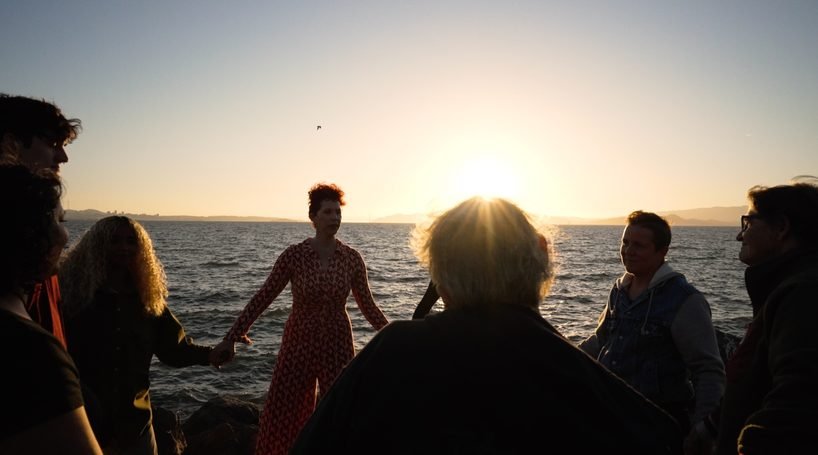
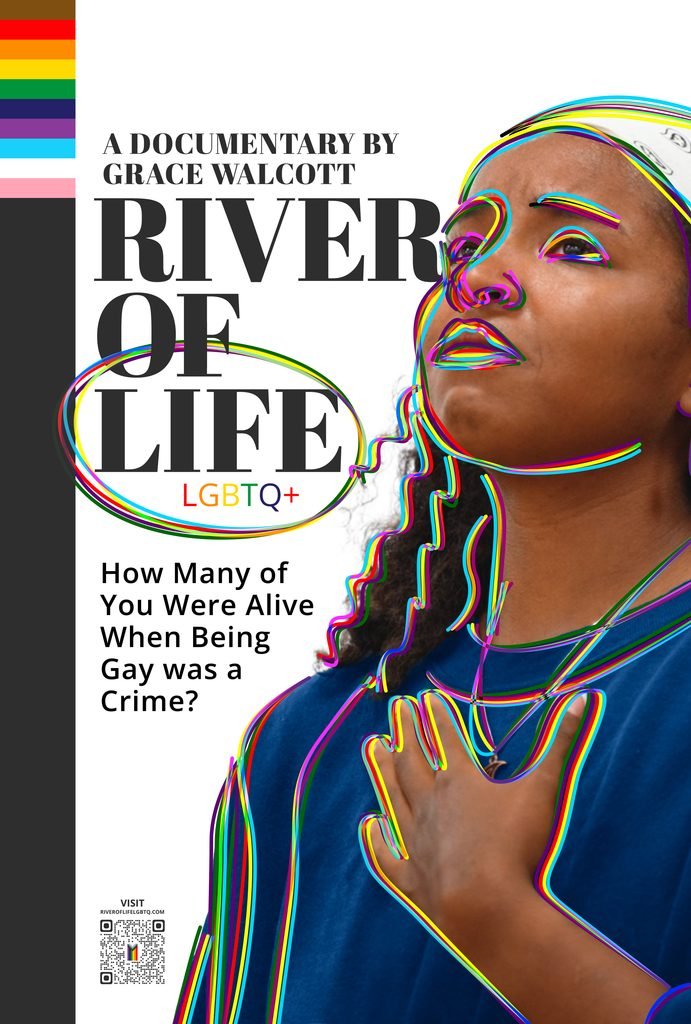
Grace Walcott Discusses Her New Documentary Film, River of Life, LGBTQ+ in an Interview with Mick Sandoval.
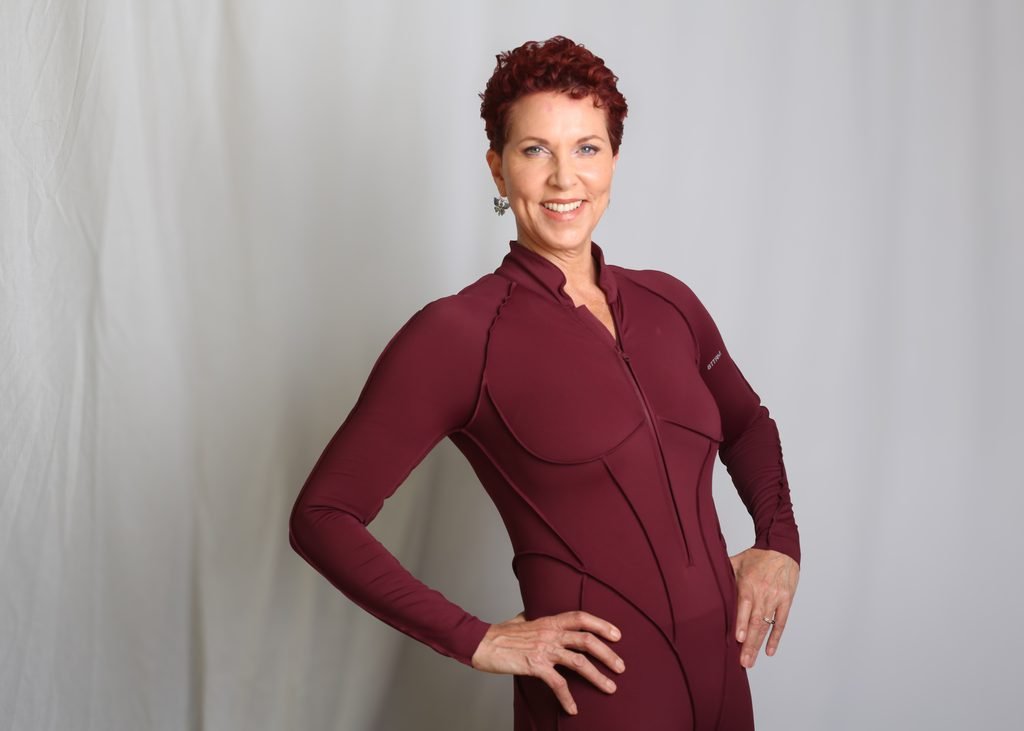
When Grace Walcott first imagined a documentary that would bring LGBTQ+ people together to build a space of acceptance, she worried the idea was too simple — not “cutting-edge” enough to matter. She needn’t have worried. By building a mixed-identity, intergenerational group and setting a tone of curiosity and compassion, River of Life, LGBTQ+, releasing October 11th, creates something far more radical than she could have imagined.
Within the first weeks of filming, participants began telling her they’d never felt this comfortable in the LGBTQ+ community. Trans participants said they’d never been in a mixed group where they could speak candidly about being trans and still feel fully accepted. Elders described the relief of finally being seen and valued by a younger generation.
“Toni Morrison said if there’s a book you want to read that hasn’t been written yet, you have to write it,” Walcott says from her home in Oakland. “This was the workshop I needed. It helped me see that I could trust both my therapeutic and artistic instincts — that connection and mutual recognition can be transformative, even radically liberating.”
We spoke with Walcott about the film, her own journey, and why she believes unity — not sameness — is what will carry the LGBTQ+ community through this moment.
You’ve said art can be “a portal through which we find meaning and healing.” What does that mean in practice?
As a drama therapist, I’ve seen firsthand how art becomes a pathway to healing. When people come together in a group, we create through play, improvisation, storytelling, and movement — unpacking trauma in ways ordinary conversation can’t reach. That’s what I wanted to show in the film: healing as a creative, communal, playful process. The subject is serious — internalized oppression can decimate individuals and communities — but healing doesn’t have to be solemn. Laughter and play help us survive dark times.
The film’s title comes from a drama-therapy exercise in which you map your life as a river — its flow and the rocks. What did your own river look like?
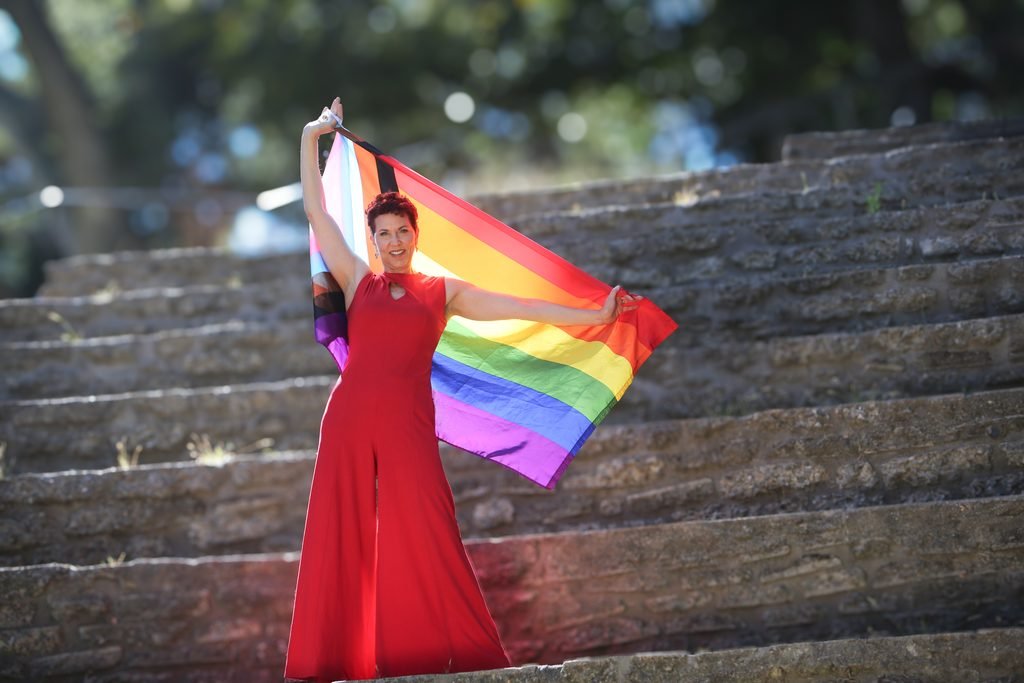
For a long time, it felt blocked by a societal dam. I was married to a man but still felt part of me was a lesbian. I had an affair with a woman, and a lesbian friend was dismissive of it; two close friends even refused to march with me in the Dyke March. Other friends welcomed me and marched alongside me, but I still felt insecure about where I belonged. Later, when I began marching with trans people, the dam finally broke, and my life started to flow more freely.
Why was that?
I realized my queerness isn’t only about who I’m attracted to — it’s about my gender identity, too. I identify fully as a woman, and also as male. Recognizing that duality was deeply liberating. Mapping my river, I saw it had been an underground spring beneath my whole journey — sometimes hidden, but always there.
So where are you today?
In an exhilarating stretch of rushing rapids. My river doesn’t feel dammed anymore — it feels connected to something larger than itself: my love and devotion to my LGBTQ+ community.
This film is a love letter to that community.
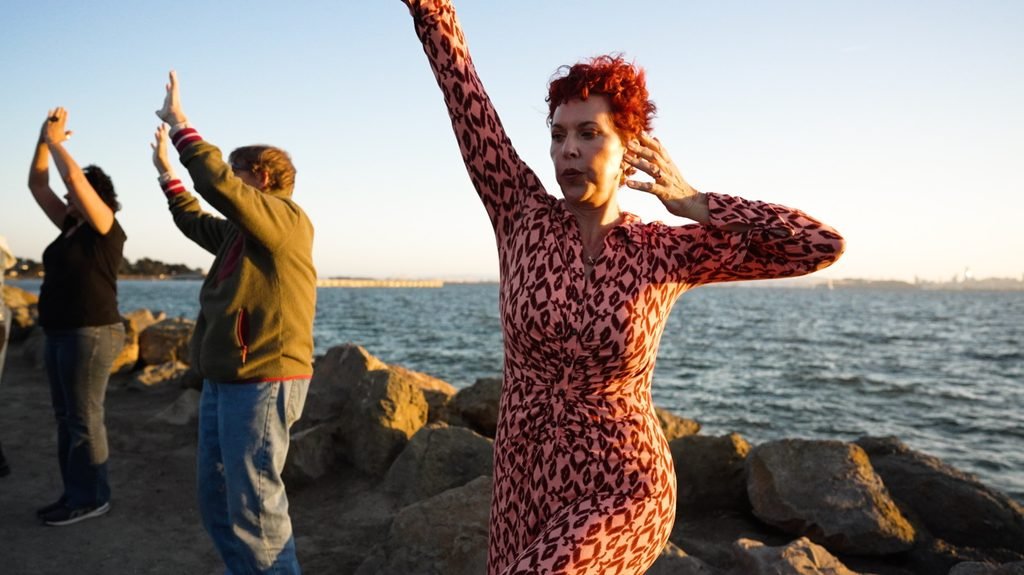
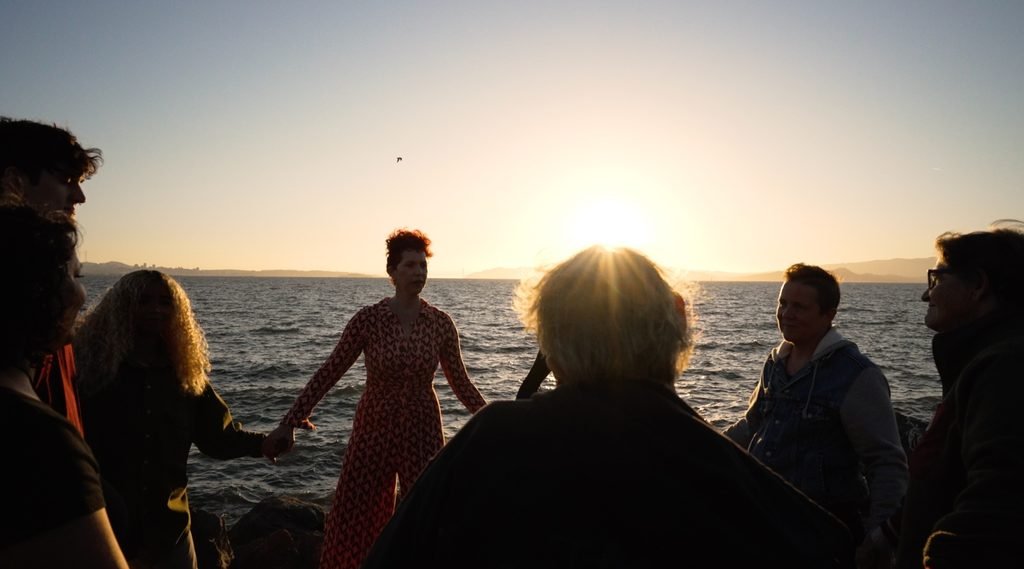
I regularly facilitate drama therapy groups for LGBTQ+ participants, and attendance can be inconsistent. But all 13 participants in this film showed up for ten consecutive weeks, three hours a night. I think what sustained that was knowing we were healing and making the film together — and that their voices mattered.
Elders in the film recall surviving bar raids and the AIDS crisis, while younger participants challenge them on gender in real time. Where did you find yourself in that exchange?
Somewhere in between — a bridge between the elders’ history and the younger generation’s evolving language around gender. I remember when it was more dangerous to be openly gay. I was living in New York during the AIDS crisis, when the government ignored the epidemic because gay men were seen as having brought it on themselves. ACT UP was one of the most successful liberation campaigns ever, full of gutsy humor and solidarity. That fear, anger, and resilience are part of me — they connect me to the elders in the film, and to our history.
Is today’s generation fighting a similar battle with gender?
I feel enormous gratitude for the energy coming from younger queer people. One of the elders in the film, Sim, says: “In this younger generation, it’s like they have a kaleidoscope, and nobody’s afraid to turn the dial and discover something about themselves.” I feel that way too. Their openness to questioning and deconstructing gender invites all of us to stay curious and keep evolving.
You’ve said the current political climate is scapegoating trans people to divide the LGBTQ+ community, and that this film is your answer — a case for unity.
With the Trump administration targeting trans people to divide us, it’s crucial that we make an extra effort to understand one another and the power of our shared history. Division makes us easy targets. Connection gives us strength — and political power.
Is there a divide between the younger and older generations?
While making the film, I was struck by how many younger participants didn’t know about Anita Bryant, or how the gay community organized against her — or how ACT UP pressured the pharmaceutical industry to speed up clinical trials for lifesaving drugs. I recently spoke with a gay man in his thirties who’d never heard about the time ACT UP put a giant condom over Senator Jesse Helms’s house. What a bold, hilarious statement that was.
If the film has a call to action, it’s in that spirit. It asks us to remember that we’ve survived by standing together — while recognizing that unity doesn’t mean sameness. Protecting the community means making room for difference, disagreement, and ongoing change. It means defending the right of every queer person — including me — to discover who we are and keep becoming.
For more information, visit RiverofLifeLGBTQ.com.