
The following interview with Stephanie Major was done by Paul Sanchez.
It’s been a rough year for the citizens of Minnesota’s Twin Cities of Minneapolis/St. Paul. ICE, the United States Immigration and Customs Enforcement, invaded the area this past winter and deported hundreds of residents, many of whom were here legally. Families were broken up, with ICE even resorting to violence, killing two young Minneapolis residents, Renne Nicole Good and Alex Pretti, neither of whom was an immigrant. The residents of the Twin Cities took to the streets in anger, loudly condemning both the killings of Good and Pretti, as well as the deportations.
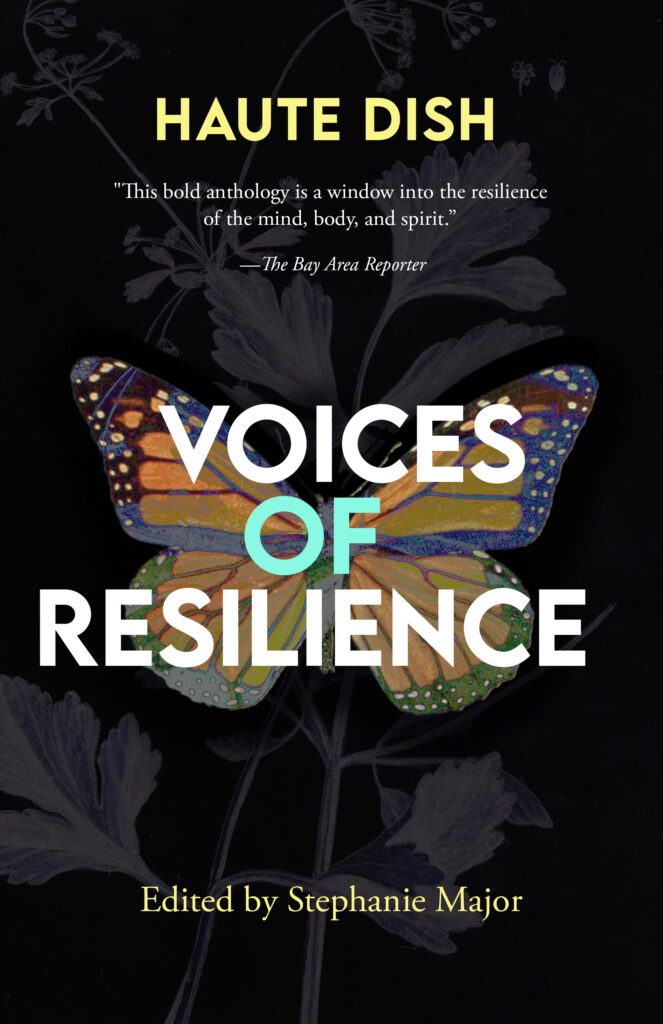
Now, students at Metro State University in St. Paul have responded to the horrors that ICE brought to the area in a new anthology titled Voices of Resilience. In this collection of poems, memoir pieces, and fiction, the students have written eloquently about the endurance of the human spirit. The book poses the question, what does it take to survive, and what does that survival leave behind?
The book features a diverse body of contributors, including several from the LGBTQ community, such as Kit Renard, a queer, nonbinary person, whose fiction piece, I Stop At the Roses, tells the moving story of their attempt to save a stray cat that’s about to be hit by a truck.
Voices of Resilience was edited by Stephanie Major, a lesbian and full-time student at Metro State, where she studies creative writing and digital marketing. She is a poet, writing as Stephanie Althea West, and is mom to two young women, and, as she puts it, an “opinionated” cat.
Major was kind enough to take the time to talk about Voices of Resilience and Haute Dish, Metro State’s in-house anthology series that gave birth to the book.
Paul Sanchez: First, please tell me how you became involved in this project?
Stephanie Major: In June of 2025, my two favorite professors, Dr. Suzanne Neilsen and Dr. Belo Cipriani, contacted me about this exciting opportunity. I’d just wrapped up the Spring semester, my second semester, and was already the managing editor of Haute Dish, our university’s literary anthology.

That Spring, I’d produced the second biannual issue alongside fellow student and dear friend Isaac Sonquist. At that time, Haute Dish was being locally printed and distributed around campus as a magazine. When Suzanne and Belo contacted me in June, they had a brilliant idea: Haute Dish was ready for publication. Issac had since graduated, and they knew I’d already signed on to lead Haute Dish single-handedly for the following school year. Still, there was much to discuss. Metro State had never published, and I’d be at the helm of an inaugural journey. Being a non-traditional student came to my great advantage in this situation, as I have two decades of professional experience under my belt.
But it’s not all transferable skills and management experience. I have lived in this world and survived it because of poems and stories. I have thrived because of poems and stories. I bleed passion for the written word. After a few conversations about the ins and outs and processes, we were ready to see this thing through. And thus, I began my first foray into editing.
PS: Now, please tell me a bit about the Haute Dish series, its mission statement, etc. What do the words Haute Dish mean?
SM: Haute Dish was founded in 2004 by Professor Neilsen. Haute is another way of saying fancy or high-class, so it is a play on words for our colloquial Minnesota saying, “Hot Dish,” which is a mix of ingredients that bake together into a cohesive meal. Some folks may call this a casserole, but that is such a drab word for such a fabulous dish, don’t you think? Furthering the pun, “to dish” means to share the gossip, to tea, the haps. So we have our amalgamation of poetry and stories straight from our students’ lives, hearts and minds that come together into our anthology. Thus “Haute Dish.”
PS: What was your process in selecting the pieces and writers that ended up in the final copy of the book?
SM: Students submitted their pieces in one of three genres: poetry, memoir, and fiction, without their names or any other identifying information. Then, I had a team of selection editors I’d put together, and everyone was assigned one genre. They read through every piece in the assigned genre, looking for major disqualifications such as exceeding the word count or being off-topic for the theme. As the managing editor, I read every piece. Then, we got together, and each group discussed its selections. It was difficult to whittle down to what remained; we had so many great pieces to choose from. Finally, we had our selections. Calling out “team, we have a book,” and seeing the excitement on everyone’s faces after such long, hard work is something that will live on in my memory.
PS: How is the City of Minneapolis holding up after the horrors of this past winter?
SM: I’m going to be frank here. The ICE situation is still active. It may have receded, but it has not ended. ICE raids have cost the city hundreds of millions of dollars, multiple vibrant and beautiful lives, and a sense of safety. The city is still grieving their neighbors who were injured, kidnapped, and murdered. There is a collective trauma, and you can feel it all around you.
But everything you’ve seen about Minnesotans coming together is true. The network of support, both practical in terms of rides and groceries and cleanup and legal assistance and more, and emotional in terms of working through the grief, is an astounding thing to witness. Minnesotans will prevail. I am sure of it. We always do. Look at how we handle the winters. We drive through blizzards and go to work. We chip away at the ice and keep it moving. Cold is the last thing that could ever take us down.
PS: What do you hope readers will take from the anthology?
SM: I hope readers will find their own sense of resilience strengthened, as I did reading these pieces. It is so human to share our stories with each other, to witness each other’s downfalls and comebacks. I hope readers will feel that human connection in the pages. And I hope I can see, through reviews, social media, or even an email, what stood out to readers and why. Each story becomes its own unique thing to each unique reader, and I can’t wait to hear how everyone else experiences and digests this anthology.
Haute Dish: Voices of Resilience is now available through Oleb Books: https://olebbooks.com/
For questions about this book or to connect and learn more about Stephanie Major’s work, please email: stephanie_major@icloud.com
For info on future volumes in the Haute Dish series, please visit their website at: https://hautedish.metrostate.edu