

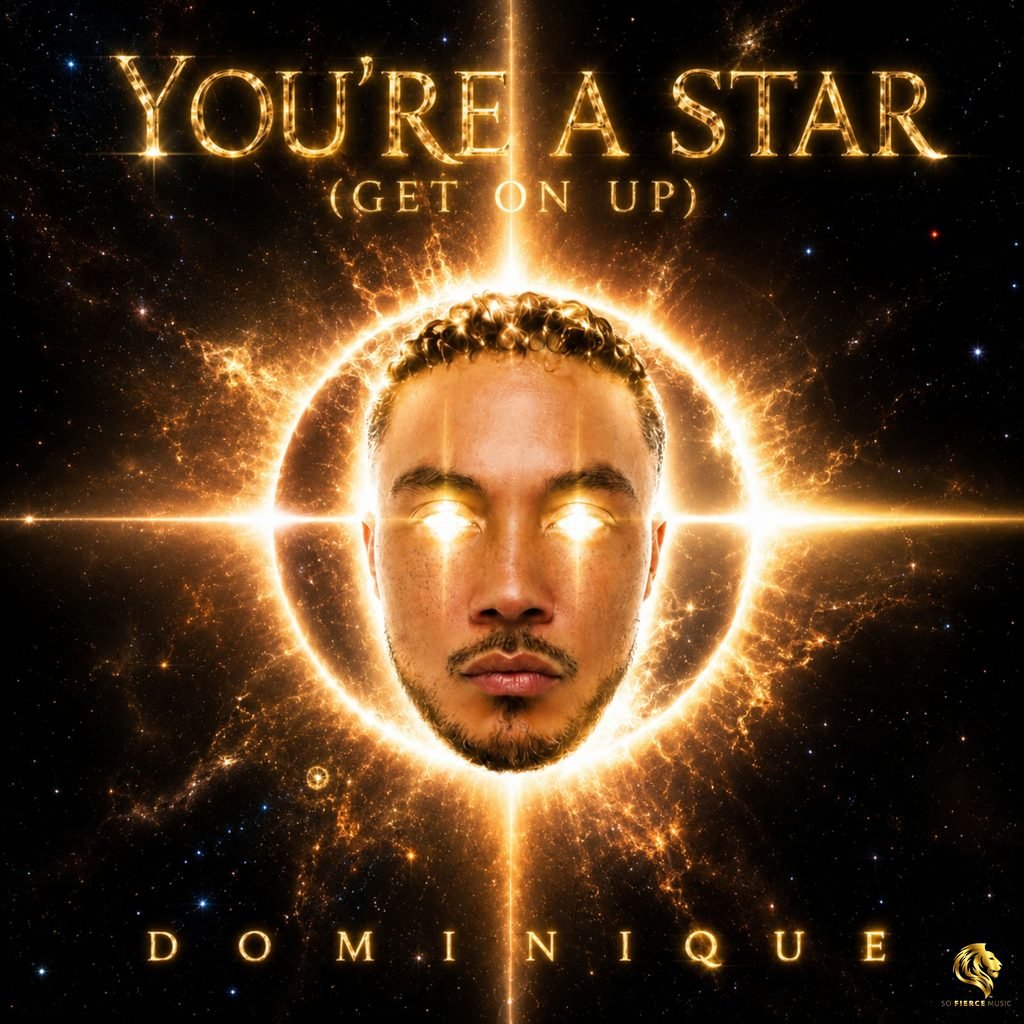
This month’s feature is an interview with Dominique about the new release of his debut single entitled “You’re A Star (Get On Up).” This interview is provided courtesy of its author, Brian Hug, and Project Publicity.
Dominique has spent most of his life at the piano. Raised on the East Side of Columbus, Ohio, he picked out melodies by ear at three years old and later served as principal bassoonist in the Columbus Symphony Youth Orchestra as a teenager, building a career as a classically trained pianist and composer. But his debut vocal single, “You’re a Star (Get on Up),” out now on all major streaming platforms, comes from a different place entirely; a period of his life he calls the hardest he’s ever lived through.
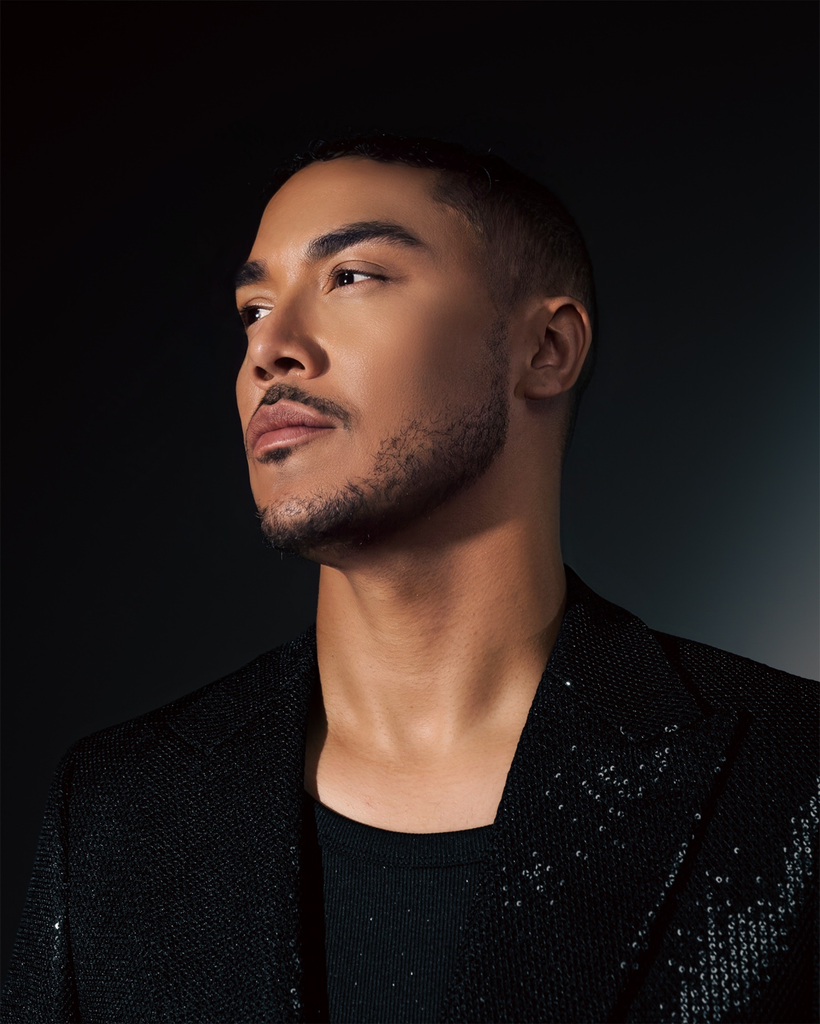
After losing both of his parents to cancer in quick succession, Dominique found himself unmoored, eventually experiencing homelessness and addiction. “You’re a Star (Get on Up)” was written on the edge of his bed roughly two and a half hours before he walked into the studio to record it, at the tail end of that period: part reckoning, part reminder to himself to get back up.
The single arrives with an unusually wide footprint. Alongside the original track, co-produced with electronic producer Velvet Code (whose credits include remix work on Lady Gaga’s Chromatica), the release rolls out across UK house, Afrobeats, Latin fusion reggaeton, disco, Afro house, tropical house, melodic house, funky house, and tech house versions, with additional remixes following on October 9 and October 16.
We sat down with Dominique to talk about what it took to rebuild—and how that rebuilding shows up in the music now.
Rebuilding your life and rebuilding your art happened at the same time. Did one make the other possible?
For me, playing piano and other instruments has always connected me to a divine source. Growing up, any time I felt pain or dealt with bullying or racism, I would go straight to my piano. It somehow helped me get over it. When I was homeless, I didn’t have that remedy anymore. I didn’t have any of the tools I needed, and it made it so much harder to get out of that situation. But music gave me a reason to fight. I knew I didn’t want to leave this earth without having said something, in some way, that remained. I was patient, but I came to see it as a divine plan; something meant to light a fire inside of me and activate my star. In the midst of homelessness, I embraced that light, and it illuminated my path out of that bottomless pit.
What was the actual turning point when you knew you were going to fight your way back?
I had my little dog, Rosie, with me. She gave me a reason to keep going and fix my life somehow, even when I wasn’t enough of a reason. I knew I couldn’t keep living trapped outside, trying to maintain hygiene and nourishment. I prayed and meditated to calm myself internally and started doing my best to do right by everyone I could.
You describe “You’re a Star (Get on Up)” as “the commanding voice inside” you had to find to get out of that situation. What finally unlocked the song after everything you’d been carrying?
Other homeless people used to say, “That damn Dominique. He’s the only person I know who sleeps outside and wakes up happy in the morning!” I always thanked them for the compliment. I changed myself simply by choosing to, knowing I couldn’t take another minute of the suffering that was consuming me. Anything positive was better. I still practice that mindset today.
Before this, you were known as a classical pianist and composer. What made this the right moment to step out as a vocalist and put your own words and story on record?

Even though I’m a pianist, a lot of people actually know me for singing. I’ve been in choirs and different vocal groups throughout my life, and I always loved doing gospel solos. But I never ventured into this space as an artist, even though I always wanted to and felt called to. It’s just difficult to find the right people to help you get there. That’s why I’m so grateful to have met my producer, Velvet Code. I had all the musical theory, ideas, melodies, and harmonies; I just didn’t have the equipment until I met him.
You’ve said this song was also a promise kept to your parents. How present are they in the music you’re making now, and in how you think about what comes next?
My parents and their love remain with me stronger than ever. It’s strange. It almost feels more powerful now, in their physical absence, than it did before. Both of my parents were civil servants; they spent their lives working for others’ best interests. When I think about what comes next for me, I think about their work ethic, their values, their commitment to doing for others. I want to keep making music and bringing something positive, inspiring, and encouraging into the world.
Why was it important to you that the recording sound human rather than polished?

My mom used to say, “If it ain’t broke, don’t fix it.” As technology keeps advancing, I want to plant my flag in the space of classic singers from an earlier era; to create something that, someday, might be appreciated simply for being real.
For anyone reading this who’s in the middle of their own collapse and can’t yet picture the other side, what do you wish someone had told you back when you were sleeping outside?
You can do it. No one is better than you. You are still everything you ever were. Someday you will get out of this. Don’t worry. You simply have to take your power back and gain control over your mind, body, and soul. Don’t waste any of it on silly people. Make sure you’re only around people who make you feel better when you think of them or are near them, and never worse. Once you start doing that and eliminate all of the darkness that’s been torturing you, you will feel better than you could ever imagine right now. Just keep going. You’re never alone.
“You’re a Star (Get on Up),” and its Afrobeats mix are available now on all major streaming platforms, with additional remixes releasing October 9 and October 16.